
Introduction
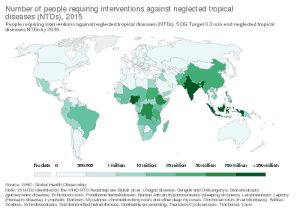
Neglected Tropical Diseases (NTDs) represent a major global health burden, affecting over one billion individuals worldwide, particularly in low- and middle-income regions. Among these diseases, infections caused by protozoan parasites of the Trypanosomatidae family remain especially devastating. These include African sleeping sickness (caused by Trypanosoma brucei), Chagas disease (caused by Trypanosoma cruzi), and leishmaniasis (caused by Leishmania species).
African sleeping sickness, transmitted by the tsetse fly, is fatal if untreated. The disease progresses from early-stage infection to severe neurological impairment, ultimately leading to coma and death. Existing treatments suffer from serious drawbacks, including high toxicity, complex administration protocols, and limited accessibility. As a result, there is a pressing need to identify novel molecular targets and develop cost-effective therapeutic strategies.
Glycosomes: Unique Metabolic Organelles in Trypanosomatids
A defining feature of trypanosomatid parasites is the presence of glycosomes, specialized organelles that compartmentalize glycolytic enzymes. Unlike most eukaryotic cells where glycolysis occurs in the cytosol these parasites sequester key metabolic pathways within membrane-bound structures.
Glycosomes belong to the broader family of peroxisomes and share similar mechanisms of formation (biogenesis). Their function is absolutely essential: if glycosomal enzymes are mislocalized to the cytosol, it leads to uncontrolled metabolic reactions and rapid parasite death. This makes glycosomes an attractive and highly specific target for drug development.
Peroxins and Organelle Biogenesis: The Missing Pieces
The formation and maintenance of glycosomes depend on proteins known as peroxins (PEX proteins). While dozens of peroxins have been identified in yeast, plants, and humans, only a limited number have been characterized in trypanosomatids. This gap is largely due to the evolutionary divergence of these parasites, which makes sequence-based identification challenging.
Among known peroxins, many are involved in importing proteins into the glycosomal matrix. However, the mechanisms governing glycosomal membrane formation remain poorly understood. In other eukaryotes, three key proteins PEX3, PEX16, and PEX19 coordinate this process. Until recently, only PEX19 had been identified in trypanosomatids, leaving a critical gap in understanding.
Discovery of PEX16 in Trypanosoma brucei
Using advanced bioinformatics approaches, researchers identified a previously uncharacterized protein in Trypanosoma brucei that shares structural features with PEX16 proteins found in other organisms. Despite low sequence similarity (~16% identity), the presence of conserved domains confirmed it as a functional homolog of PEX16, now termed TbPEX16.
Further structural analysis revealed that TbPEX16 is an integral membrane protein with transmembrane domains and cytosolic-facing termini, consistent with PEX16 proteins in higher eukaryotes.
Subcellular Localization: PEX16 Resides in Glycosomes
Fluorescence microscopy using GFP-tagged TbPEX16 demonstrated a distinct punctate distribution pattern within the parasite, characteristic of glycosomes. Co-localization studies with known glycosomal markers, such as aldolase, confirmed that TbPEX16 is indeed localized to the glycosomal membrane.
Additionally, homologous PEX16 proteins from Leishmania species exhibited similar localization patterns when expressed in trypanosomes, suggesting a conserved function across trypanosomatids.
Functional Analysis: PEX16 Is Essential for Parasite Survival
To investigate the role of TbPEX16, researchers employed RNA interference (RNAi) to reduce its expression. The results were striking:
- Significant growth inhibition was observed within 2–3 days
- Approximately 70% reduction in parasite proliferation
- Accumulation of dead cells and cellular debris
These findings clearly indicate that PEX16 is essential for parasite viability.
Disruption of Glycosomal Protein Import
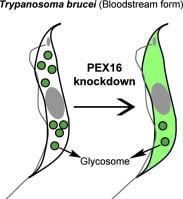
One of the most critical consequences of PEX16 depletion is the mislocalization of glycosomal enzymes. Normally confined within glycosomes, enzymes such as aldolase and GAPDH were found dispersed in the cytosol following RNAi treatment.
This mislocalization is highly toxic because trypanosomal glycolytic enzymes lack regulatory feedback mechanisms. When present in the cytosol, they trigger uncontrolled metabolic flux, leading to:
- ATP depletion
- Accumulation of toxic intermediates
- Rapid cell death
Impact on Glycosome Number and Cellular Organization
PEX16 knockdown also led to a dramatic reduction in the number of glycosomes per cell. While normal cells contain dozens of glycosomes, RNAi-treated cells often had fewer than 10.
Moreover, glycosome distribution became highly asymmetric, with most remaining organelles localized to the anterior region of the cell. This abnormal spatial organization highlights the role of PEX16 in both organelle biogenesis and intracellular positioning.
ATP Depletion and Motility Defects
Because glycolysis is the sole source of ATP in bloodstream-stage trypanosomes, disruption of glycosomal function has severe energetic consequences. Experimental measurements showed up to 70% reduction in cellular ATP levels following PEX16 knockdown.
This energy deficit directly affects parasite motility, a process that requires continuous ATP consumption. A subset of cells exhibited:
- Reduced movement speed
- Loss of normal flagellar beating
- Reversed motility direction
These defects further compromise parasite survival and infectivity.
Mechanistic Insights: Role of PEX16 in Organelle Biogenesis
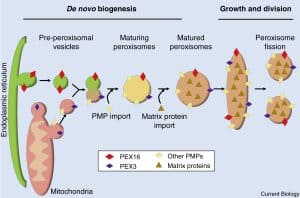
PEX16 appears to play a central role in glycosome formation, possibly by acting as a membrane anchor for other peroxins such as PEX3 (yet to be identified in trypanosomes). Its function may be linked to de novo organelle biogenesis from the endoplasmic reticulum, rather than simple division of existing glycosomes.
This hypothesis is supported by:
- Reduced glycosome numbers near ER exit sites
- Similar phenotypes observed in other organisms with PEX16 defects
- Evidence suggesting ER-derived pathways contribute to glycosome formation
Therapeutic Potential: A Promising Drug Target
One of the most important implications of this research is the identification of TbPEX16 as a potential drug target. Due to its essential role in parasite survival and its low similarity to human proteins, targeting PEX16 could allow for:
- High specificity
- Reduced off-target toxicity
- Novel treatment strategies for NTDs
Furthermore, studying PEX16 may help uncover other missing components of the glycosome biogenesis machinery, including the elusive PEX3 homolog.
Conclusion: Advancing Molecular Parasitology and Drug Discovery
The identification and characterization of PEX16 in trypanosomatid parasites represent a significant step forward in understanding glycosome biology. This work not only clarifies the mechanisms underlying organelle biogenesis but also highlights a critical vulnerability in parasite metabolism.
By linking molecular function to cellular survival, these findings open new avenues for the development of targeted therapies against diseases that continue to affect millions worldwide.